Journalism Lab-Biodiversity
Preserving biodiversity and protecting the climate are the central tasks of our time. But while climate change is a frequent topic in the media, biodiversity often takes a back seat in reporting—a worrying trend. Ecological stability and economic interdependencies are inseparably linked.
Partner
With the Journalism Lab Biodiversity, we are strengthening the depth and quality of reporting. Through fellowships we support experienced, independent journalists in presenting complex connections between nature and the economy in an accessible way. In times of information overload and economic pressure, quality-oriented journalism is essential: it provides verified facts, stimulates public debate, and thereby strengthens democratic structures.
The key research questions for 2026 are:
- Should the value of nature be integrated into business and national economies in the future?
- What robust solutions and projects exist to make nature conservation economically viable?
- What critical lessons can be drawn from previous attempts in this regard?
- And what competing perspectives on the value of nature exist in politics, business, and among consumers?
Our project and implementation partner is the non-profit organization Riff freie Medien GmbH. It supports outstanding, professional journalists who work as freelancers for media outlets with national or regional reach. The project is led by the renowned and award-winning science journalist Christian Schwägerl (FAZ; Yale E360; Spiegel, among others). Since 2015, he has founded and built up RiffReporter eG and Riff freie Medien gGmbH.

Anja Reiter
Anja Reiter is a freelance journalist based in Munich, specialising in environment, education and science. Her work has been published in „Die Zeit “, „atmo“and „Süddeutsche Zeitung“. She researches the environmental and social consequences of the climate and biodiversity crises, as well as issues relating to educational equity and science policy.

Foto: Marina Weigl
Astrid Viciano
Dr. Astrid Viciano is a freelancing medical journalist and doctor. She writes for “Süddeutsche Zeitung”, “Tagesspiegel”, “Der Spiegel”, “GEO”, “Die Zeit”, “NZZ” and others, and is senior editor of the research project “Medien-Doktor” at TU Dortmund. In 2025, her non-fiction book “Die Formel des Widerstands (The formula for resistance)” (Galiani, Berlin) was longlisted for the Science Book of the Year award in Austria. She lived in Paris for several years and has since been working on investigative projects in cross-border teams supported by European grants. In Los Angeles, she completed a Master’s degree in ‘Specialised Journalism’ at the Annenberg School, graduating with an Award for Academic Excellence. In 2022, she was a journalist-in-residence at the IBEC Institute in Barcelona. As a lecturer, she has taught at the University of Freiburg, the Bavarian Press Academy and the Mexican Academy of Sciences amongst others. She regularly gives lectures and hosts events. Her journalistic work has received numerous awards, including the Georg-von-Holtzbrinck Prize for Business Journalism.

Foto: Ute Hieke
Florian Sturm
As a freelancing journalist Florian Sturm is based in Leipzig and writes for various media outlets both in Germany and abroad: from “Spektrum der Wissenschaft”, “Science Notes” und “Focus” through “Green Peace Magazine” (CH) and “Bayerischer Rundfunk”, to “The Guardian” (UK) and “National Geographic” (US). His great passion is the sea, to which he has devoted much of his research time and so far, one book (the second is currently in the making). Currently he is working on a long-term project on the topic of ‘scientific fraud’. Florian is firmly convinced that he has the best job in the world. He gives back a part of this privilege by donating five percent of his annual income to charitable organizations and offsetting all CO₂ emissions generated by his work whether from travel, overnight stays or working at his desk.

Foto: Gonçalo Fonseca
Friederike Stahmann
Friederike Stahmann has been working as a freelancing journalist since 1994 specialising in agriculture and the food industry. For many years, she worked directly from a farm – today she works with a view of the farm and remains closely connected to these topics. She enjoys telling the whole story – from the blade of grass to the wheel of cheese and right into the shopping trolley. In doing so, she never loses sight of political developments and conflicting objectives. For many years, she was also responsible for the research behind multi-award-winning infographics that presented the complex interrelationships between production, processing and trade in an accessible way. Her work is underpinned by a degree in agricultural science, a traineeship at a specialist journal and her PhD in agricultural science, which she completed in Göttingen in 2014. Her articles appear in publications such as “top agrar”, “Lebensmittel Praxis”, “Tagesspiegel Background” and various weekly newspapers.

Foto: private
Iris Proff
Iris Proff is a freelance science journalist based in Cologne. Her work focuses on topics relating to biodiversity and climate change on the one hand, and psychology and neuroscience on the other. Her articles appear in publications including “Spektrum der Wissenschaft“, „Der Tagesspiegel“ and „Deutschlandfunk“. She studied cognitive science in Osnabrück and Amsterdam. On the side she organizes seminars for the “WPK”, the German professional association for science journalists.

Foto: Iris Proff
Jacqueline Goebel
Jacqueline Goebel is a trained business and magazine journalist. She works as a freelance journalist and reporter covering the tension between business and the environment, most recently for “STRG_F (NDR)”, “BrandEins”, “Süddeutsche Zeitung” and “Wirtschaftswoche”. In her investigations, she has tracked illegal waste exports to Malaysia and Turkey, exposed the destruction of new goods at Amazon, and examined the consequences of weather manipulation. Her work has received numerous awards. In 2019, “Medium Magazin” named her one of the “Top 30 under 30” in German journalism. In 2023, her first book, “Die Plastiksucht (The Plastic Addiction)”, was published by Finanzbuchverlag.

Foto: private
Julia Belzig
Julia Belzig works as a freelance journalist in Berlin. She researches topics relating to social (in)justice, human rights and the realities of marginalised communities. She writes for publications including the “taz”, “Tagesspiegel” and “Der Journalist”. She previously lived in Bristol, England, where she completed a Master of Science in ‘Gender and International Relations’ at the University of Bristol. In her research, she is particularly interested in how global crises, such as the climate crisis, affect people differently and intensify existing inequalities.

Foto: Annkathrin Weis
Karin Finkenzeller
Karin Finkenzeller has been a journalist half her live – against the advice of her career counsellor at secondary school. Her social background simply did not fit the picture. Her decision to study translation and interpreting proved useful when editorial teams sent her to Latin America and Africa to report, and to Spain and France as a correspondent. For several years now, she has also been taking her readers along to Eastern Europe. Her investigations into the economy, the environment and social upheavals have been published in renowned newspapers such as the “Frankfurter Allgemeine Zeitung” and in magazines and have been recognised with awards and scholarships.

Foto: Fotostudio Robra (München)
Leoni Bender
Leoni Bender works as a freelance journalist in Hamburg. She previously lived in Sweden for two years, where she completed master’s degrees in ‘Sustainable Communication’ at Jönköping University and ‘Investigative Journalism’ at the University of Gothenburg. Leoni finds in-depth research into environmental protection and global interconnections particularly fascinating. The question that often drives her is: how can we make room for biodiversity in an increasingly crowded, hotter and hungrier world? Her articles have appeared in publications including “Der Spiegel”, “Zeit Online”, “Correctiv”, “Krautreporter”, “Atmo” and “Flip”. She volunteers with the Climate Journalism Network.

Foto: Micha Theiner
Rüdiger Braun
Rüdiger Braun hat Biologie, Verhaltensforschung und Philosophie in Würzburg studiert. Er war PR-Referent beim Aueninstitut des WWF und Redakteur des Umweltmagazins natur. Als Chefredakteur entwickelte er für die Max-Planck-Gesellschaft das Wissenschaftsmagazin MaxPlanckForschung. Bei der Wochenzeitung Die Woche in Hamburg leitete er das Ressort „Wissenschaft & Technik“. Von 2010 bis 2014 war er als Associate Director für die Kommunikationsabteilung des Climate Service Center in Hamburg verantwortlich. Seither arbeitet er als Buchautor und ist unter anderem für die Zeitschriften Stern, GEO und Focus tätig. Für seine Arbeit wurde er mehrfach ausgezeichnet, unter anderem mit dem Holtzbrinck Preis für Wissenschaftsjournalismus 2018.
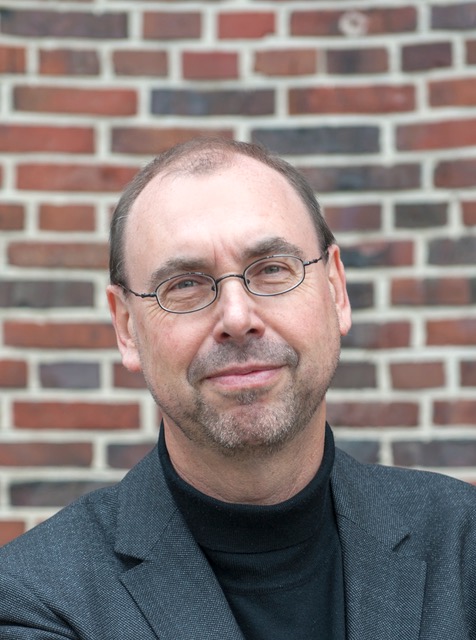
Foto: Nicole Keller
Sonya Winterberg
Sonya Winterberg works as a freelancing journalist and documentary film maker. After studying in Freiburg in Breisgau and Amherst, Massachusetts (USA), she went on to complete a Master of Arts in European Digital Media at the University of Portsmouth (UK). Her work now focuses on environmental issues, biodiversity and sustainable lifestyles. Among other things, she explores how historical and social processes shape ecosystems and how communities respond to ecological change. Her projects combine field research, oral history and visual storytelling to make complex interrelationships accessible. She lives in Halifax (Canada).

Foto: Klaus Mellenthin
Tomma Schröder
Tomma Schröder has been working as a freelance science journalist since 2009 and covers topics such as climate change, sustainability and transformation for the Deutschlandfunk, as well as other print and online media outlets. She has a passion for radio and the sea and lives in Flensburg.

Foto: private
Partner
Programme Management
Pia Puljanic
Image Credits:
01. Image: Source: © Unsplash / James Wheeler