Clean Island – a waste management project against plastic waste in Indonesia
Partner vor Ort:
Clean Island is pilot project by the foundation KfW Stiftung in Namlea on Buru Island, Indonesia. In collaboration with our partner, Veritas Edukasi Lingkungan, it combines environmental education in schools, community participation and the development of collection and processing infrastructure. The aim is to create a scalable model for waste management that prevent plastic waste whilst also creating jobs, generating income and improving health. The project has been running since mid-2026.
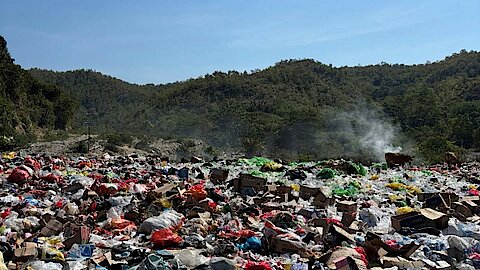
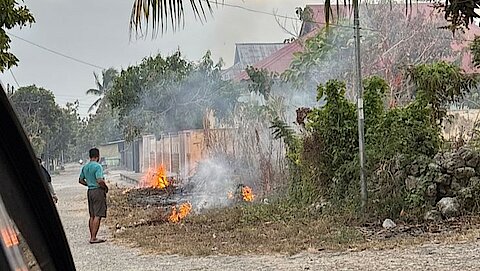

What is the waste situation in Indonesia?
As one of the world’s most biodiverse countries, Indonesia is struggling with a massive waste problem that particularly affects the oceans. Every year, the country produces 3.2 million tons of plastic waste, of which approximately 1.29 million tons end up in the sea uncontrolled (source: UNEP, 2020). Plastic releases toxins into the water and enters the global food chain in the form of micro- and nano plastics. This pollution is damaging marine biodiversity and ecosystems, which provide a livelihood for large sections of Indonesia’s population. The rest of the waste is simply incinerated in most regions; there is no established system for waste management.
Pilot project in Namlea: The 3R-model against plastic waste
The aim of the pilot project in Namlea on Buru Island is to demonstrate that sustainable behavioral change, combined with reliable waste collection and processing can bring diverse improvements
Through a broad environmental education approach – Reduce, Reuse, Recycle – in local schools, the aim is to raise awareness of how to manage waste. This includes educational games, both online and offline, workshops and, of course, clean-up events.
In collaboration with local authorities, new structures are being further developed and established to improve waste management. This includes the establishment of Plastic Recovery Centres (mini-PRCs). A scalable model will be developed in collaboration with strategic partners that integrates the four key elements:
- Education on waste prevention based on the 3R principle (Reduce, Reuse, Recycle)
- Engaging and involving the community
- Development of collection and processing infrastructure
- Widespread communication to ensure long-term embedment
The behavioral change sought through this project therefore has an immediate impact, creates new jobs in the newly established waste management sector, increases household income and improves the health of the population through reduced air pollution.
Local partners:
Programme management
Pia Puljanic
Image credits
- Image: Source: Veritas Edukasi Lingkungan
- Image: Source: Veritas Edukasi Lingkungan
- Image: Source: Veritas Edukasi Lingkungan